

New Test Lab Puts Hydrogen Pipelines to the Limit
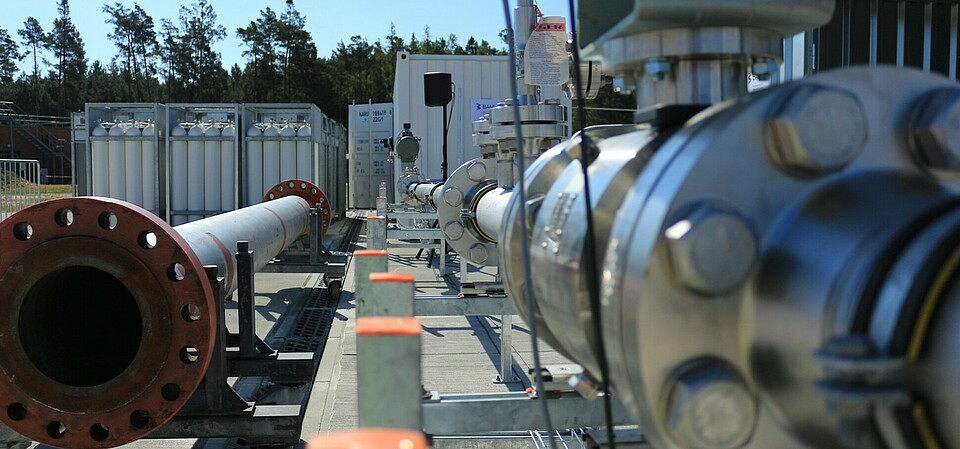
New real-world laboratory for hydrogen networks at BAM's Technical Safety Test Site. © BAM
Germany just got a new place to stress-test its hydrogen future, quite literally. The Bundesanstalt für Materialforschung und -prüfung (BAM) has opened a real-world testing lab for hydrogen networks at its technical safety site in Baruth/Mark, Brandenburg, according to a press release from BAM. At the center of it sits ModuH2Pipe, a modular test platform the institute describes as the first of its kind in Europe.
The timing makes sense. Germany is aiming to build a hydrogen backbone of more than 9,000 kilometers by 2032, largely by converting existing natural gas pipelines. That network is meant to eventually plug into the wider European Hydrogen Backbone, expected to stretch roughly 50,000 kilometers by 2040. Before any of that can run safely, though, plenty of technical questions need answers, from how existing materials hold up to how pipelines behave under shifting operating conditions.
That's where ModuH2Pipe comes in. The platform can subject pipes to repeated pressure swings between 10 and 85 bar, mimicking the ramp-up and ramp-down of a real hydrogen grid, and can even introduce contaminants to study aging effects. For safety research, components can be pushed all the way to 900 bar, far beyond normal operating limits, so researchers can study exactly what happens if something fails.
Dr. Kai Holtappels, spokesperson for the H2Safety@BAM competence center, called the lab an "innovation motor" for the hydrogen economy at the opening event, which drew around 150 attendees, per BAM. The German Federal Ministry for Economic Affairs and Energy funded the platform with €3.8 million from the government's economic recovery package.